


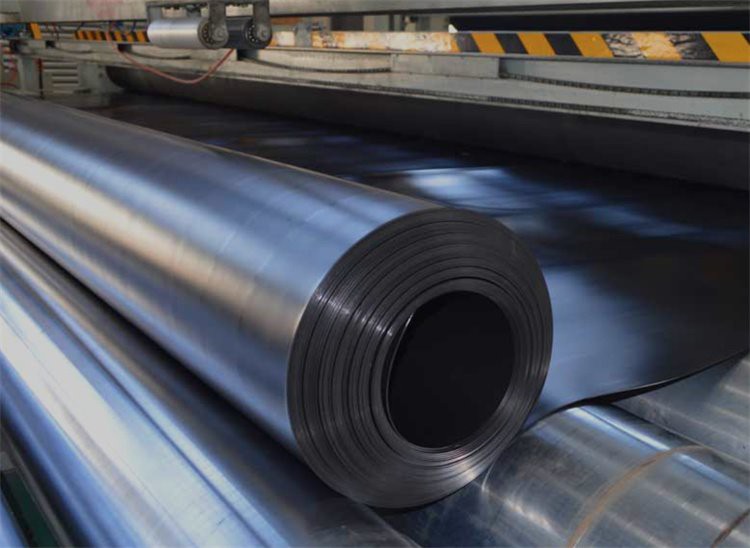
LLDPE geomembrane is manufactured from virgin polyethylene resins, offering great flexibility and outstanding resistance to low temperature and ultraviolet exposure. High-quality and economical, it is intended for long life and exhibits a high degree of strength and durability.
Unlike compacted clay and other natural liners, geomembranes are highly resistant to chemicals, acids, oils and temperature swings. Proper installation results in a continuous non-permeable layer with a long service life. Regular inspections help identify and repair any damage that could occur over decades of use.

24H online service
We try and respond to all concerns within 24 hours and our teams are always at your disposal in case of any emergencies.
Because LLDPE is flexible and resistant to bends, it can be prefabricated into large panels in factory conditions. This signifies that all welding and testing for the LLDPE can be performed indoors, in controlled settings, without the effects of wind, dust or rain. The harder HDPE on the other hand must be entirely welded and tested at the jobsite. Depending on the thickness of the LLDPE geomembranes, panels of up to 25,000 SQM can be prefabricated into one. This is an advantage for smaller projects, because a single panel designed to the project specifics can be rapidly deployed and installed.

Linear low-density polyethylene geomembrane is produced from PE-LLD or LDPE as raw materials and is produced using a blow molding process. In addition to its good ductility, small specific gravity, and low temperature resistance, linear low-density polyethylene geomembrane also has the advantages of better flexibility, puncture resistance, and impact resistance of linear membranes. Commonly used membrane thicknesses are 0.5- 3MM.
Low-density polyethylene geomembranes are often used in agricultural water conservancy, water plants, and aquaculture projects, while PE-LLD linear membranes are used in a wider range. In addition to agricultural breeding, they are also often used in tunnels, chemical industry, construction and other projects for anti-seepage and leakage prevention. use.
Now in the geomembranes market, there is a list of materials for you to choose from, Geomembrane is a geotechnical anti-seepage material made of plastic film as the anti-seepage base material and composited with non-woven fabric. The anti-seepage function of the new material geomembrane depends on the anti-seepage function of the plastic film. At present, the plastic films used for anti-seepage at home and abroad include polyvinyl chloride (PVC), polyethylene (PE), EVA (ethylene/vinyl acetate copolymer), and ECB (ethylene vinyl acetate modified) is planned to be used in tunnel applications. Asphalt blend geomembrane), they are a kind of polymer flexible material, with small specific gravity, strong extensibility, high adaptive deformation capacity, corrosion resistance, low-temperature resistance, and good frost resistance.
Landfill Geomembrane is a waterproof and insulating material with high molecular polymer as the basic raw material. Landfill Geomembrane is a waterproof and insulating material with high molecular polymer as the basic raw material. divided into low-density polyethylene (LLDPE) geomembrane, high-density polyethylene (HDPE) geomembrane, and EVA geomembrane.
It is used in waste landfills, tailings storage sites, pathway anti-seepage, dike anti-seepage, subway projects, etc.
High Density Polyethylene (HDPE) has a density greater or equal to 0.941 g/cm3. This sheeting option has the highest density, highest strength, highest resistance to punctures and tears, the greatest chemical resistance, and typically the best UV resistance. This sheeting is ideal for chemical containment, hazardous waste, and landfills.
Linear Low Density Polyethylene (LLDPE) has a density range of {{0}}.915 – 0.925 g/cm3. LLDPE is not to be confused with Low Density Polyethylene (LDPE), as LLDPE is a blended version of LDPE, giving it greater flexibility and strength. They are useful for their flexibility and can adapt to uneven surfaces. They are ideal for low-intensity projects like decorative ponds.
Medium Density Polyethylene (MDPE) has a density range of {{0}}.926 – 0.940 g/cm3. It is an excellent middle ground between low and high density polyethylene. This sheeting has good chemical and puncture resistance while remaining flexible enough for a wide range of uses.
When cutting during construction, be sure to conduct an on-site inspection of the construction site before cutting, and do not follow the drawings. Especially during the construction of projects related to people's lives and industrial safety, good construction methods must be paid attention to, so as to ensure the safety of dams and roads.
Geomembrane is an anti-penetration material made of polymer materials with excellent anti-permeability properties and mechanical strength.
Geomembranes can prevent water waste. In water conservancy projects, such as reservoirs, dams, rivers, channels, and other buildings, geomembranes as anti-seepage layers can prevent groundwater or river water from entering the surrounding environment through leakage. This will not only reduce the consumption of groundwater resources but also avoid losses caused by massive leaks.
Geomembranes should be rolled up during transport and storage to prevent damage. Geomembranes should be shipped in such a way that they are protected from extreme temperatures and other external influences. First of all, you should decide on the application area and have an expert team for exploration. Not all geomembranes are of the same quality, so you need to be careful when choosing. Geomembrane is a non-slip, unbreakable and flexible material. It is preferred in many projects due to its high strength. This product, which provides sealing in pools, has become very popular. Geomembrane is a product resistant to certain temperatures.
maq per Qat: